
DuPont - Using Science To Protect Our Protectors
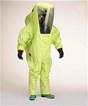
In recent years, the threat from global terrorism has become more pertinent. The use of CBRN (chemical, biological, radiological and nuclear) weapons poses a greater threat than ever before making the provision of sufficient effective personal protective equipment (PPE) a core task for governments globally. Science company DuPont is committed to protecting our protectors by providing many of the most trusted brands available to protect from ballistic, thermal and CBRN threats.
DuPont has a 200 year history in providing solutions to the military amongst others for ballistic, thermal and CBRN threats. DuPont Nomex fibres used in conjunction with other materials and DuPont Tychem garments are specially developed to provide solutions against CBRN threats. In addition, the heat and flame resistant nature of Nomex provides protection against thermal risk while DuPont Kevlar has been designed to provide solutions against ballistic threats.
Broadly speaking, there are two main types of suits: gas tight and gas permeable. Gas tight suits rely on an impermeable barrier to protect the wearer from hazards whereas gas permeable suits are breathable, allowing body moisture to circulate through the garment. DuPont is dedicated to protecting against CBRN risks and has specially developed and incorporated its Tychem and Nomex solutions into these suits to ensure a high level of protection.
Tychem garments are made of fabrics tested against a broad range of hazardous materials to determine permeation, which is critical to fabrics that are exposed to hazardous chemicals. DuPont has specially developed the fabric to help protect first responders from hazardous liquids, vapours, gases and particulates. A range of solutions is available, depending on the threat and level of protection required.
Nomex is used in conjunction with other fabrics to provide air-permeable protective suits designed to be more comfortable for the wearer whilst still protecting against thermal and CBRN risks. DuPont recently developed a new technology platform available under Nomex LS that allows the Nomex fabrics to become lighter and stronger focusing in particular on combined improvements in abrasion and tear strength. With Nomex LS light fabrics a new level in wearability and protection has been reached.
More is being asked of the emergency responders than ever before. Faster responses, evolving threats and more complex technology all require the ability to innovate and adapt to rapidly changing threats. DuPont scientists and engineers can draw on a 200 years history of innovation to engineer the high-performance fibres and materials that are making a major contribution to personal and collective protection.
SOURCE: DuPont